
Last updated: March 2026 Reviewed by the BC strata management team at Duka Management
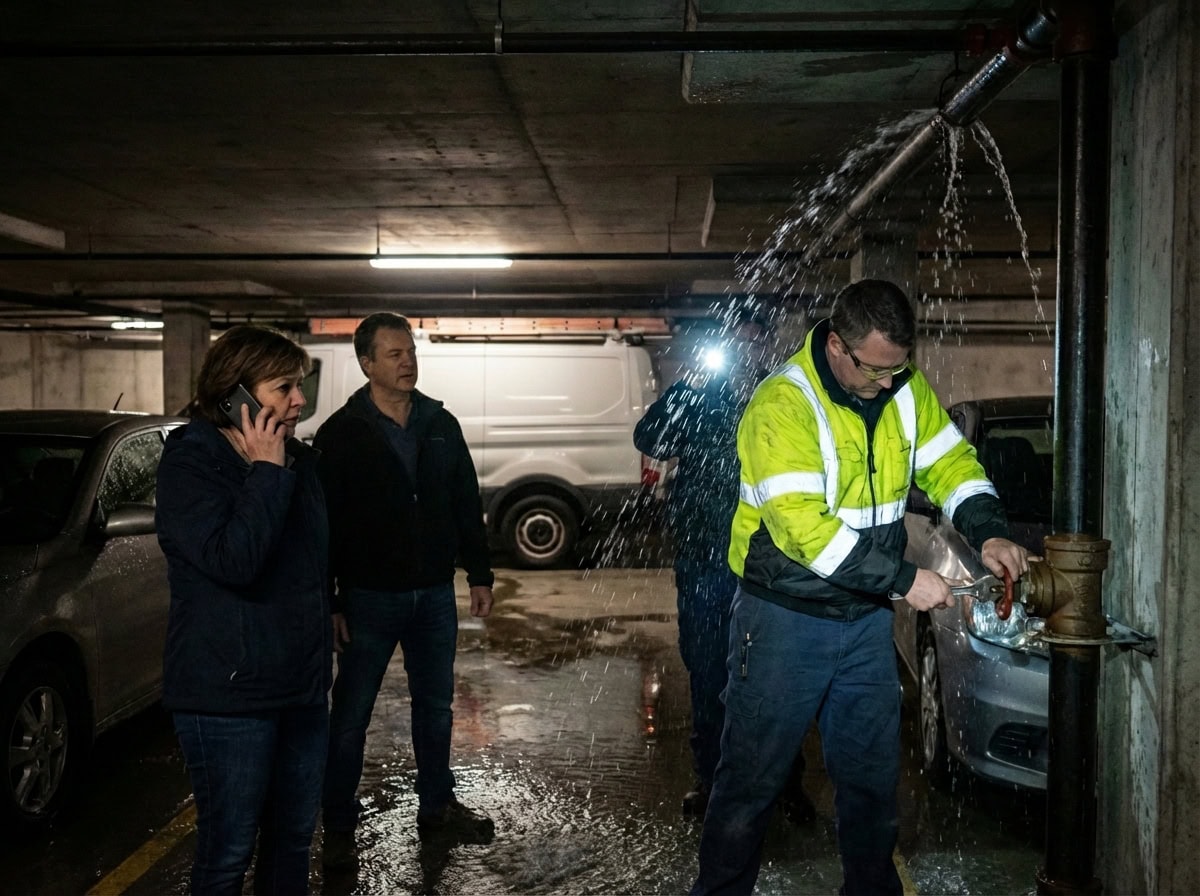
Strata emergencies almost never happen at a convenient time. A water leak starts after midnight. A garage gate stops working on a holiday weekend. An atmospheric river exposes an envelope leak. A cold snap bursts a pipe in the parkade. When that happens, the real question is not whether the strata has a rulebook. It is whether someone can act immediately, safely, and with enough judgment to stop a bad situation from getting worse.
That is why 24/7 strata support matters so much in British Columbia. For many strata corporations, emergency planning is discussed as a general governance responsibility. The harder operational question is what happens when a resident calls after hours and the issue cannot wait until morning.
BC’s official guidance on handling emergencies in strata corporations source makes the stakes clear. Stratas need to be prepared for emergencies ranging from water leaks and fires to floods and earthquakes, and the Strata Property Act includes specific emergency exceptions around meeting notice, access, and emergency spending.
For volunteer strata councils, that is a serious burden to carry alone. A proper 24/7 support structure does not just answer the phone. It can reduce damage, help the strata act within the emergency framework the law allows, coordinate the right trades quickly, and give the council a documented response process instead of a 2 a.m. scramble.
Key Takeaways
- 24/7 support matters because many strata emergencies escalate quickly if no one acts after hours.
- BC’s strata emergency rules allow certain urgent actions around meetings, access, and spending when safety or significant loss is at stake.
- Delayed response can increase repair costs, insurance deductibles, resident disruption, and council stress.
- Good emergency support is more than an answering service. It requires coordination, documentation, and technical judgment.
- Duka’s BC model ties 24-hour emergency monitoring and service to in-house technical support and transparent follow-up.
Defining a Strata Emergency Under the BC Strata Property Act
Not every after-hours issue is a true emergency, and that distinction matters. If the strata treats every inconvenience as urgent, response systems get overloaded. If it treats real emergencies too casually, the corporation can face preventable damage, higher costs, and avoidable resident risk.
In practical terms, a strata emergency is an issue that requires immediate action to ensure safety or prevent significant loss or damage. The Province’s emergency guidance uses that exact framework, and Duka’s BC strata emergency FAQs source give practical examples of residential emergencies such as flooding and leaks, elevator failures, garage-door failures, unit door locks that will not lock, and broken windows or balconies.
That is useful because emergency response in a strata often involves both common property and private living space. A water leak may begin in one strata lot but threaten hallways, electrical systems, or multiple homes. A garage or elevator issue may begin as an inconvenience but quickly become a security or access problem. A broken window or compromised door may create an immediate safety issue even if the underlying repair responsibility still needs to be sorted out later.
This is where 24/7 support becomes operationally important. The first job is not always to settle final liability. The first job is to stop the loss from spreading.
The Hidden Costs of Delayed Emergency Response
The biggest cost of a slow emergency response is rarely the first invoice. It is the chain reaction that follows.
Water is the obvious example. A leak that is isolated quickly may still be disruptive, but a leak that runs for hours can affect drywall, flooring, ceilings, common areas, insulation, elevators, and neighbouring strata lots. Even when insurance is available, the corporation may still face a deductible, owner frustration, contractor coordination problems, and the administrative cost of handling the loss.
BC’s official strata insurance guidance notes that after an insured loss, the strata corporation can pay its deductible from the Contingency Reserve Fund (CRF) source without an owner vote, or by special levy without an owner vote, if the deductible is required to repair or replace damaged property. That flexibility helps in a crisis, but it does not make the event inexpensive. It just means the corporation has a legal path to act quickly.
There is also a broader operational cost. Councils must still communicate with residents, document the event, coordinate access, preserve records, and decide what follow-up repairs or investigations are needed. Delayed emergency response usually makes every one of those jobs harder.
The Province’s repair and maintenance guidance source also stresses that the duty to arrange repairs and the duty to pay for them are not always the same. That matters in emergencies because the strata may need to act first and sort cost allocation later. A capable after-hours response structure helps the corporation move in that order.
BC weather makes this more than a theoretical concern. Heavy rainfall, wind-driven building-envelope failures, and winter freeze events can all turn a minor weakness into a fast-moving water-damage problem. In that environment, 24/7 support is part of water damage mitigation, not just customer service.
Legal Exceptions: What the BC Strata Property Act Allows During an Emergency
One reason professional after-hours response matters in BC is that the law recognizes real emergencies do not fit normal timelines.
The Province’s handling emergencies page source explains that the Strata Property Act and Standard Bylaws include special emergency exceptions. To deal with an emergency, Standard Bylaw 14 allows a strata council meeting to be called with less than the usual one week’s notice as long as all council members either consent in advance or are unavailable after reasonable attempts to contact them.
That same guidance also says that, under Standard Bylaw 7, owners and tenants must allow a person authorized by the strata corporation to enter a strata lot without notice in an emergency to ensure safety or prevent significant loss or damage. For councils, that is a major practical protection, but it also means someone has to make a reasonable call, document what happened, and manage access appropriately.
The Act also recognizes that emergency spending may be needed before the usual approval process can happen. The Province states that Section 98(3) allows a strata to make an expenditure from the operating fund or the CRF without the normally required vote if there are reasonable grounds to believe the immediate spending is necessary to ensure safety or prevent significant loss or damage. The corporation must not exceed the minimum amount needed, and owners must be informed as soon as feasible.
Those rules are powerful, but they are not an excuse for chaos. They work best when the strata has a process for emergency escalation, vendor dispatch, recordkeeping, and council communication. That is exactly where 24/7 support matters.
Why 24/7 Support Is a Game-Changer for Strata Councils
It Reduces Volunteer Burnout
Strata councils are usually made up of volunteers with jobs, families, and limited time. A council member may be committed and capable, but that does not mean they should be triaging contractor calls, access disputes, and mitigation decisions in the middle of the night.
Without proper support, the same directors often become the emergency bottleneck. Residents call the council directly, contractors want approval on the spot, and nobody is sure who is recording the event or coordinating follow-up. That is not a sustainable governance model.
Professional 24/7 support changes that. The call is answered, the urgency is screened, the right people are notified, and the issue moves into a defined response process instead of relying on whichever council member answers first.
It Helps Prevent Larger Losses
Speed matters, but informed speed matters more. The goal is not simply to dispatch someone. It is to take the right first step quickly enough to protect safety and reduce loss severity.
Duka’s BC strata management services source highlight 24-hour emergency monitoring and service, along with trade coordination, preventative maintenance programs, and emergency planning. That matters because good emergency response is rarely one isolated phone call. It is a chain of actions: intake, triage, site attendance, mitigation, contractor coordination, resident communication, and documented follow-up.
In a large or high-density strata, that structure can make the difference between a contained incident and a building-wide problem.
What a 2 a.m. Emergency Should Look Like
The practical value of 24/7 support is easiest to see in sequence:
- a resident reports active water at 2:00 a.m.
- the call is screened immediately and treated as a true emergency
- the right trade is dispatched and access is coordinated
- water is shut off or isolated as quickly as possible
- the council receives a clear update once immediate loss is contained
- mitigation, documentation, and next-step repair planning begin the same day
That is the difference between active response and passive message-taking.
The Duka Difference: 24/7 Support Backed by Real Building Knowledge
One of the biggest weaknesses in the market is after-hours support that functions as little more than a message relay. A resident leaves a voicemail, an operator takes a note, and everyone waits too long for the right person to make sense of it.
Duka’s BC strata emergency FAQs source make the response chain clearer: during business hours, residents are directed to their property manager, and after hours they are directed to a 24-hour emergency number, with life-threatening emergencies routed to 9-1-1 first. That alone is useful because it gives residents and councils a defined escalation path instead of improvisation.
But the stronger advantage is that Duka ties emergency response to broader operational support. The BC About page source emphasizes technical support from Duka Consulting Inc., fewer buildings assigned to each senior manager, accurate financial reporting, and BCFSA-regulated strata management. In practice, that means after-hours emergencies are not handled in isolation from the building’s broader technical and financial context.
That matters in three ways:
- technical consulting support source helps the strata move beyond temporary containment toward the right repair strategy
- transparent reporting makes emergency spending and follow-up easier for councils to review
- a management team with lower overload risk is better positioned to coordinate response properly
For strata corporations dealing with repeated leaks, aging systems, envelope problems, or complicated repair scopes, those differences are not cosmetic. They affect outcomes.
Common Emergency Response Questions BC Stratas Should Ask
If a council is comparing management firms, 24/7 support should be examined closely rather than accepted as a generic promise. Practical questions include:
- Who answers after-hours emergency calls?
- How is a true emergency distinguished from a routine service issue?
- How are trades dispatched and supervised?
- What authority exists for immediate mitigation work?
- How are owners and council members updated?
- What records are created after the event?
- How are emergency costs tracked and explained?
Those questions help reveal whether the strata is getting a real emergency-response system or only an answering service.
Frequently Asked Questions
What is considered an emergency in a BC strata?
An emergency is a situation requiring immediate action to ensure safety or prevent significant loss or damage. Common examples include major leaks, fire-related issues, severe security problems, or critical building-system failures.
Can a strata corporation enter a strata lot without notice during an emergency?
Yes. BC’s emergency guidance says that under the Standard Bylaws, an authorized person may enter a strata lot without notice in an emergency to ensure safety or prevent significant loss or damage.
Can a strata council hold an emergency meeting without normal notice?
Yes. The Province states that a strata council meeting can be called with less than the usual one week’s notice to deal with an emergency if the required consent or reasonable contact efforts have been made.
Can the strata spend money from the CRF during an emergency without an owner vote?
Yes, if there are reasonable grounds to believe the spending is immediately necessary to ensure safety or prevent significant loss or damage. The Province also notes that insurance deductibles required to repair or replace damaged property can be paid from the CRF without an owner vote.
Why does 24/7 support matter if the strata already has an emergency plan?
Because a plan still has to be executed. 24/7 support gives the strata an actual response mechanism for after-hours calls, contractor coordination, mitigation, and communication when the incident is happening, not just a document that exists on file.
Conclusion: Emergencies Need More Than Good Intentions
Emergency response in a strata corporation is not only about preparedness. It is about execution under pressure.
BC’s emergency rules give strata corporations the ability to act quickly when safety or significant loss is at stake, but those legal tools only help if the strata can actually respond in real time. That is why 24/7 support matters. It protects residents, reduces damage, supports legal and operational decision-making, and takes unnecessary after-hours burden off volunteer councils.
If your strata council wants a management partner that combines 24-hour emergency monitoring and service source, technical consulting support source, and the option to request a BC strata management proposal source, Duka’s BC team is set up to help.
About This Article
Written and reviewed by the BC strata management team at Duka Management. This article is for general information only and is not legal advice.