
Last updated: July 2026 Reviewed by the Ontario condominium management team at Duka Management
Condo risk management is the discipline of identifying what can go wrong, deciding how serious it could be, and putting practical controls in place before the corporation is forced into reaction mode.
For Ontario condo boards, risk is not only a legal issue. It can show up as deferred maintenance, weak reserve fund planning, poor records, common expense arrears, unclear vendor scopes, insurance claims problems, emergency response gaps, owner disputes, financial reporting surprises, or missed compliance steps.
The board does not need to eliminate every risk. That is impossible. The real goal is to reduce avoidable exposure, document decisions, escalate issues to the right professionals, and make sure the corporation is not relying on memory when records, contracts, reports, and timelines matter.
That approach also helps future directors. Good risk records give the next board a clearer starting point instead of forcing them to rediscover old problems.
This article is general educational information, not legal, accounting, tax, audit, engineering, insurance, health and safety, fire safety, reserve fund study, or investment advice. Ontario condominium boards should rely on qualified professionals for corporation-specific decisions.

What Condo Risk Management Means
Condo risk management is a structured way for the board and management to track the corporation’s major building, financial, governance, and operational risks.
It usually includes:
- identifying risks
- assigning priority
- documenting who is responsible for follow-up
- tracking deadlines and decisions
- keeping supporting records organized
- reviewing whether the risk is getting better or worse
- escalating to lawyers, auditors, engineers, consultants, insurance advisors, or other specialists when required
A simple risk register can help. It does not need to be complicated. A board can track the issue, category, likelihood, possible impact, current controls, next action, responsible person, and review date.
The point is not to create paperwork for its own sake. The point is to make sure important issues do not disappear between meetings.
Ontario Board Duties and Governance Risk
Ontario condo boards are responsible for overseeing the affairs of the condominium corporation.
The Condominium Authority of Ontario explains that boards manage the corporation’s affairs, property, and assets, and help ensure compliance with the Condo Act and governing documents. The CAO also describes the board as having ultimate responsibility for how the condominium fares, even when a management company is involved.
That matters for condo risk management because many risks are governance risks before they become legal or financial problems.
Examples include:
- unclear board direction
- missing minutes or weak records
- delayed decisions
- poor owner communication
- conflicts of interest
- unmanaged contract renewals
- late response to professional recommendations
- directors receiving reports too late to review them
The Condominium Act, 1998 includes the legal framework for condominium corporations in Ontario. Boards do not need to become lawyers, but they do need to know when the Act, declaration, by-laws, rules, records, notices, or owner meeting requirements may affect the decision.
The Act also includes director standard-of-care language. Boards should treat that as a practical reminder: act honestly, act in good faith, ask reasonable questions, document decisions, and rely on qualified advice when the issue is outside the board’s expertise.
Directors and officers insurance should also be reviewed with the corporation’s insurance advisor. D&O coverage does not excuse careless governance, but it is an important part of protecting volunteer directors when they are acting within their role.
Building and Maintenance Risk
Building risk is often the most visible form of condominium risk.
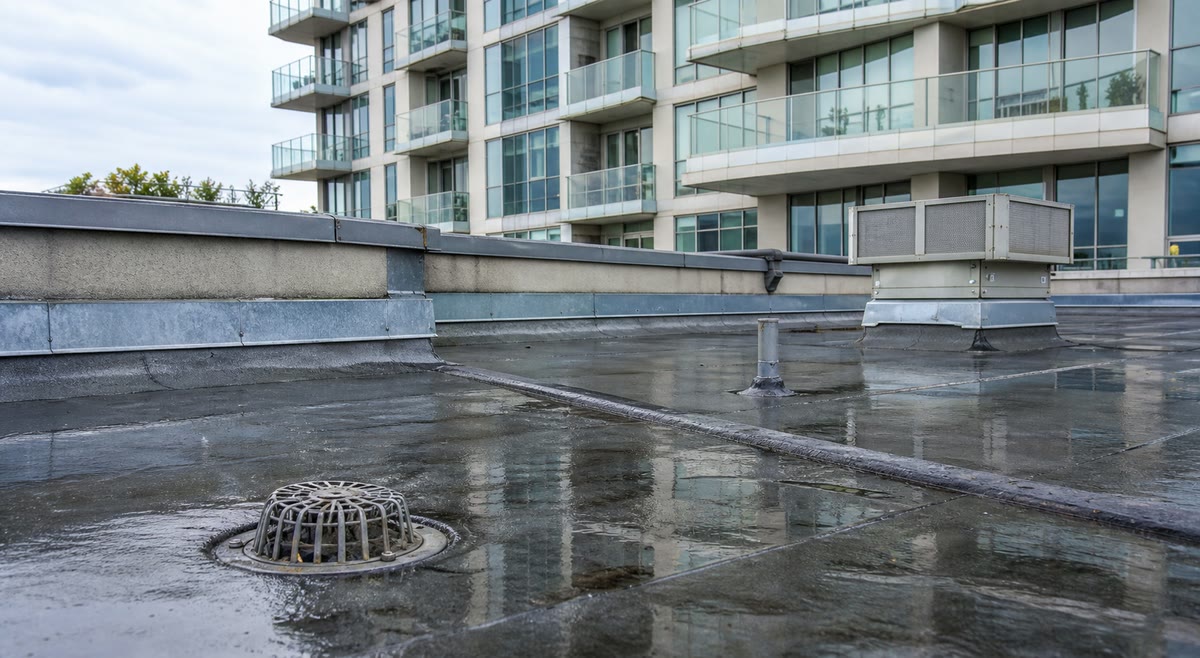
Leaks, elevator issues, garage deterioration, fire and life-safety deficiencies, roof problems, mechanical failures, access control failures, drainage issues, balcony concerns, window failures, and repeated HVAC problems can all become expensive if they are handled informally.
Boards should track:
- inspection reports
- work orders and recurring service calls
- contractor recommendations
- warranties and maintenance records
- consultant reports
- incident reports
- emergency repairs
- open deficiencies
- board approvals and follow-up decisions
Small repair patterns deserve attention. If the same pump, door, garage area, riser, drain, fan, or elevator component keeps generating calls, the board should ask whether the issue is still routine maintenance or a sign of a larger system problem.
Duka’s condominium consulting services can support boards that need help organizing building records, vendor information, maintenance history, and practical next steps before decisions are made.
Reserve Fund and Capital Planning Risk
The CAO’s reserve fund guidance explains that condominium corporations maintain reserve funds solely for major repairs and replacements of common elements and assets. Reserve fund studies help determine whether the reserve fund and owner contributions are adequate for expected major repair and replacement costs.
Reserve fund risk appears when the board treats the study as a static document instead of a planning tool.
Boards should track:
- when the next reserve fund study or update is due
- whether major components are failing earlier than expected
- whether repair history supports the study assumptions
- whether contribution levels are being followed
- whether completed projects should update future assumptions
- whether owner communication is needed around major future work
The reserve fund study provider gives professional advice within that assignment. Management helps keep records, timelines, invoices, reports, and board decisions organized. The board still needs to review recommendations and make informed decisions.
Financial Reporting, Arrears, and Fraud-Control Risk
Financial risk is not limited to theft or fraud. It also includes weak reporting, unclear invoice approval, poor arrears follow-up, underbudgeting, and board decisions made without current financial information.

Boards should review:
- monthly financial statements
- budget-to-actual reports
- arrears reports
- accounts payable lists
- reserve fund transfers
- bank reconciliation summaries
- large or unusual invoices
- chargebacks and disputed amounts
- audit findings and management letters, where applicable
Common expense arrears deserve special attention because they can affect cash flow and create enforcement pressure. Boards should track the amount, age, unit count, follow-up status, and whether legal advice is needed.
Controls also matter. The board should know who can approve invoices, who can release payments, how emergency invoices are reviewed afterward, whether vendor records are complete, and whether financial reports arrive early enough for directors to review them.
This is closely related to transparent financial reporting. If directors cannot understand the reports, they cannot provide meaningful oversight.
Insurance and Claims Documentation Risk
Insurance risk is easier to manage before a claim happens.
Boards should keep organized records for:
- insurance policies and renewal dates
- certificates of insurance
- appraisals and insurance valuations
- claims history
- incident reports
- contractor invoices
- photos and repair records
- deductible responsibility questions
- owner communications
Boards should also understand what they do not know. Insurance coverage, deductibles, exclusions, owner responsibility, and claims handling can be technical. The board should work with the corporation’s insurance advisor and legal counsel where needed.
Good documentation helps. If a loss occurs, a corporation that can quickly produce policies, reports, invoices, photos, maintenance records, and decision history is in a better position than one trying to reconstruct the facts later.
Vendor, Contract, and Procurement Risk
Vendor risk appears when the corporation depends on a contractor without enough documentation, oversight, or contract clarity.
Boards should track:
- contract terms and renewal dates
- scopes of work
- proof of insurance, where applicable
- health and safety or site requirements
- service level expectations
- quote comparisons
- change orders
- recurring complaints
- invoice approval history
Not every contract needs a legal review, but some do. Long-term, high-value, unusual, risky, or disputed contracts may require legal, technical, insurance, or accounting input.
Management can help organize vendor information and flag issues. The board still needs to approve decisions with enough context to understand cost, scope, risk, and alternatives.
Emergency Preparedness and Health and Safety Risk
Emergency preparedness is part of condo risk management because emergencies expose weak systems quickly.
Boards should understand how the corporation handles:
- water leaks and floods
- fire and life-safety incidents
- elevator outages
- power interruptions
- severe weather
- security incidents
- garage or access failures
- after-hours vendor response
- resident communication
- incident documentation
The board should not improvise emergency procedures after something happens. Emergency contacts, vendor escalation, resident notices, access procedures, insurance documentation, and after-hours responsibilities should be clear before the incident.
Professional advice may be required for fire safety, occupational health and safety, building systems, insurance, and legal issues. The manager’s role is to coordinate and document response, not replace those specialists.
Owner Communication and Records Risk
Poor communication can turn a manageable issue into a trust problem.
Owners usually do not expect every detail of every board discussion. They do expect timely, accurate information about issues that affect fees, access, repairs, safety, insurance, amenities, or major projects.
Consistent communication can also reduce dispute risk. When owners understand the reason for a repair, cost increase, rule enforcement step, or access disruption, the board is less likely to face avoidable escalation.
Boards should communicate clearly when:
- common expenses are changing
- a major repair is being planned
- an emergency affects owners
- access will be disrupted
- a special assessment or loan may be considered
- insurance or deductible issues affect owners
- rules or by-law enforcement is changing
Records matter as much as communication. Minutes, notices, contracts, financial reports, inspection records, invoices, insurance documents, legal correspondence, and owner communications should be organized so future boards are not starting from zero.
How Professional Management Supports Risk Reduction
The Condominium Authority of Ontario explains that condominium managers provide services under board direction and commonly support areas such as owner contributions, finances, records, insurance monitoring, service provider oversight, and board communication. Ontario condominium management is regulated by the Condominium Management Regulatory Authority of Ontario.
Professional management can support condo risk management by helping with:
- board reporting and meeting follow-up
- maintenance records
- vendor coordination
- insurance documentation
- arrears tracking
- budget and financial reporting workflows
- reserve fund study coordination
- emergency response procedures
- owner communication
- records organization
- specialist coordination
That support should not blur professional boundaries. The manager is not the lawyer, auditor, accountant, engineer, reserve fund study provider, insurance advisor, or health and safety consultant. A strong manager helps the board know what information is missing, which professionals should be involved, and what decisions need to be documented.
If your board is reviewing management support, explore Duka’s Ontario property management services, learn more about Duka Management, connect with Duka’s Toronto condo property management team, or review frequently asked property management questions.
FAQ: Condo Risk Management in Ontario
What is condo risk management?
Condo risk management is the process of identifying, documenting, prioritizing, and reducing risks that could affect the condominium corporation’s building, finances, insurance, governance, records, vendors, owners, or compliance obligations.
Who is responsible for condo risk management?
The board is ultimately responsible for governance and oversight. Managers and other professionals support the process, but the board must review information, ask questions, approve decisions, and obtain specialized advice when needed.
What is a condo risk register?
A risk register is a simple tracking tool that lists key risks, priority level, possible impact, current controls, next action, responsible person, and review date. It helps the board avoid losing track of important issues between meetings.
How can boards reduce financial exposure?
Boards can reduce financial exposure by reviewing monthly reports, monitoring arrears, controlling invoice approvals, tracking reserve fund transfers, documenting decisions, reviewing audit findings, and asking for accounting or legal advice when needed.
Does property management replace legal or engineering advice?
No. Property management supports administration, reporting, coordination, communication, vendor follow-up, and records. It does not replace lawyers, engineers, auditors, accountants, insurance advisors, reserve fund study providers, or other specialists.
What records help reduce risk?
Useful records include minutes, financial reports, contracts, insurance documents, incident reports, maintenance logs, inspection reports, invoices, reserve fund studies, owner notices, legal correspondence, and vendor communications.
Final Thoughts
Condo risk management works best when boards make it a regular governance habit.
Ontario boards should track building condition, maintenance records, reserve fund planning, financial reporting, arrears, insurance documentation, vendor contracts, emergency procedures, owner communication, and professional advice. None of these items removes risk completely, but together they reduce avoidable exposure.
If your Ontario condominium board wants stronger management support for risk tracking, records, reporting, vendors, and board follow-through, contact Duka Management or request a property management proposal.